India Announces New Energy Vehicles That Shake and Disrupt the Entire EV Industry
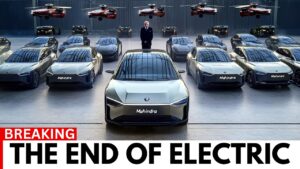
In a move that has sent shockwaves through the global electric vehicle (EV) market, India has announced a groundbreaking new line of New Energy Vehicles (NEVs) that promises to reshape the industry as we know it. Unveiled during a high-profile event in New Delhi, these next-generation vehicles combine affordability, cutting-edge technology, and sustainability in a way that experts say could “destroy the current EV market landscape.”
The centerpiece of India’s NEV strategy is an innovative platform that integrates ultra-efficient solid-state batteries, dramatically reducing charging times to under 10 minutes — a feature that current EV giants like Tesla and BYD are still striving to perfect. These new Indian NEVs also boast a range of over 800 kilometers (nearly 500 miles) on a single charge, outclassing most top-tier electric vehicles currently on the market.
But performance isn’t the only disruption India brings to the table. Pricing is a key weapon. Thanks to aggressive government incentives, partnerships with local manufacturers, and a revolutionary modular production model, these NEVs are expected to launch at prices starting 30–40% lower than comparable models from traditional EV leaders. Such affordability opens up electric mobility to a far larger demographic, especially in developing markets.
Beyond technological and economic advantages, India’s NEV initiative emphasizes green manufacturing practices. Powered by renewable energy, using recyclable materials, and designed for easy end-of-life disassembly, these vehicles set a new benchmark for sustainable production — pushing the industry toward a more environmentally responsible future.
International reactions have been swift and intense. Stock prices for several legacy automakers and leading EV companies dipped sharply following the announcement. Industry analysts warn that if India’s NEVs achieve even a fraction of their projected global market penetration, traditional EV brands could see serious disruption within just a few years.
India’s move is not just about capturing the domestic market. Major export deals are already in discussion with Africa, Southeast Asia, and parts of Europe, indicating that India has global ambitions for its new energy revolution.
In the words of India’s Minister of Heavy Industries, “This is not just about cars. This is about setting a new global standard for what clean, affordable, and high-performance transportation looks like.”
With these bold steps, India has not only entered the EV race — it has redefined it.
Would you also like a slightly more dramatic or “clickbait” version of the article, depending on your audience?