Elon Musk Reveals First-Ever Real Image of Jesus Christ: A Groundbreaking Moment in Tech and Faith
 \
\
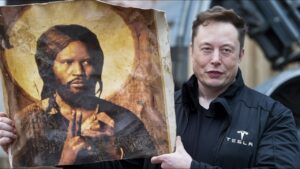
In a revelation that has captivated the internet, Elon Musk, CEO of SpaceX and Tesla, recently unveiled what he claims to be the first-ever real image of Jesus Christ. The announcement came during a live-streamed event, leaving audiences both awestruck and skeptical. Musk explained that the image was reconstructed using cutting-edge artificial intelligence and genetic technology.
According to Musk, the process involved analyzing ancient relics, DNA samples, and artistic depictions of Christ from early Christian history. His team of scientists, historians, and AI specialists worked together to create what they claim is the most accurate visual representation of Jesus. “This isn’t just a guess,” Musk stated. “This is the closest humanity has come to truly seeing the face of Jesus Christ.”
The image itself is a stunning portrayal—a solemn yet serene figure with strikingly human features that seem both familiar and otherworldly. Musk shared the image on X (formerly Twitter), where it quickly went viral, sparking widespread debate. While some praised the achievement as a blend of science and spirituality, others questioned the ethical and theological implications of such an endeavor.
Critics from religious communities have voiced concerns, arguing that faith transcends physical representations and that attempts to visualize Jesus could trivialize his spiritual significance. Meanwhile, skeptics in the scientific community have pointed out the limitations of reconstructing a historical figure based on fragmented and speculative data.
Despite the controversies, Musk’s revelation has undeniably ignited global discussions about the intersection of technology, history, and religion. Whether viewed as a scientific breakthrough or a publicity stunt, it’s a moment that underscores humanity’s enduring fascination with the figure of Jesus Christ.
As Musk himself said during the unveiling, “This is not about replacing faith; it’s about enhancing our understanding of history and culture. Science and belief can coexist.”