In an impressive display of technological prowess and statesmanship, China has unveiled a new presidential security vehicle that has astounded American defense engineers and automotive experts. The armored limousine—believed to be the result of years of secret development by the Chinese military-industrial complex—was recently officially unveiled during a highly publicized military parade in Beijing, escorting President Xi Jinping in an unannounced portion of the event.
China’s new presidential security car shocks US engineers – YouTube
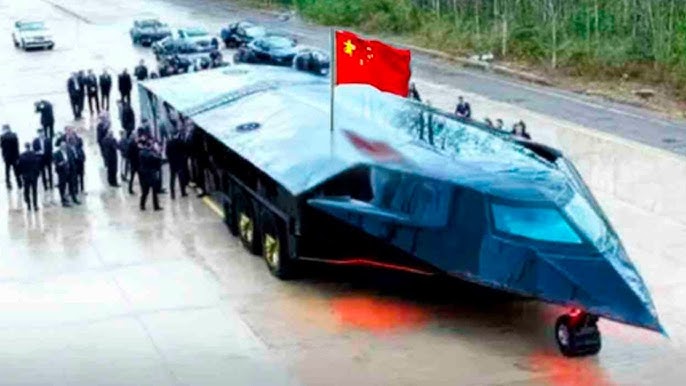
What has astonished Western analysts is not only the car’s futuristic design, but also the apparent leap in the integration of domestic technologies, jamming systems, and defensive measures that rival or even surpass those of American counterparts.
Advanced Armor and Self-Healing Body Work
Initial visual and satellite images indicate that the vehicle’s exterior is constructed of experimental composite armor combining carbon nanotubes with a modern ceramic coating. What truly surprised US engineers, however, was the alleged use of self-healing polymer layers. These allow minor surface damage—such as from bullets or shrapnel—to be “sealed” within seconds, thus reducing the risk of long-term vulnerability in hostile environments.
A leaked intelligence memo from a US defense analyst states that the material is “unlike anything else in the current fleet of Western protective vehicles, including the US presidential car, the ‘Beast.'”
Electromagnetic shielding and EMP resistance
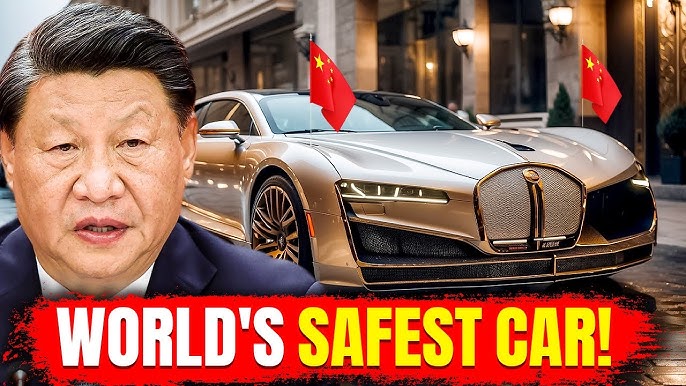
According to sources in the Chinese Ministry of Defense, the vehicle features comprehensive electromagnetic shielding. This means it can withstand targeted energy attacks or high-altitude EMP bursts—a threat many modern nations consider existential in the age of drone warfare and high-tech sabotage.
American engineers, who wished to remain anonymous, admitted that “no US presidential vehicle currently on the road has this level of built-in EMP resistance.” The vehicle is also equipped with a unique magnetic pulse jammer that can reportedly defeat GPS-guided munitions or hacker attacks by redirecting signals in real time.
AI Navigation and Threat Detection
Even more worrying for US experts is the alleged AI system in the car, developed in collaboration with Chinese quantum computing labs and national defense technology startups. This AI is said to be capable of detecting threats in real time using multidirectional lidar systems, infrared facial recognition, and sound wave analysis.
In the event of an imminent threat—such as a sniper, an in-vehicle explosive device, or a missile attack—the car is programmed to initiate evasive maneuvers automatically and without driver input. Another feature is the triggering of autonomous decoy drones in the rear to confuse approaching threats.
Global Strategic Implications
Beyond the technological marvel, analysts fear the geopolitical message this car sends: China is rapidly closing the gap in sophisticated security technology once considered the exclusive domain of Western superpowers. The timing of the car’s debut—amid rising tensions in the South China Sea and the intensifying US-China tech rivalry—suggests a bold move designed to demonstrate not only industrial strength but also deterrence.
Former Pentagon advisor Marcus Lowell commented: “This isn’t just about protecting a president. It’s about signaling to the world that China can build next-generation systems that even the US hasn’t fully developed yet.”
A wake-up call for the West?
The vehicle’s unveiling has sparked renewed calls in Washington for more funding for defense innovation. Members of Congress are reportedly demanding information from DARPA and the Secret Service on how America can respond to such advances in foreign security.
As one senior official put it: “If they can build something like this for the president, what are they building that we haven’t seen yet?”
With its blend of military technology, artificial intelligence, and psychological strategy, China’s new presidential vehicle is more than just a car—it’s a warning on wheels.