THE FUTURE OF ENERGY JUST CHANGED Elon Musk Unveils Tesla’s City-Powering Battery System — A Breakthrough That Could End Fossil Fuels Forever
The global energy landscape may have just shifted beneath our feet. In a stunning announcement that stunned analysts, investors, and world leaders alike, Elon Musk has revealed Tesla’s most ambitious invention to date: a
mega-scale battery system capable of powering entire cities for weeks, storing clean energy on a scale previously believed impossible.
Musk is calling it the beginning of the end for fossil fuels.

And if he’s right, the world’s energy giants—oil, gas, and even traditional utility companies—are staring at a future more uncertain than ever.
🌍 A Battery That Can Power Cities for Weeks?
Tesla’s new system, unofficially dubbed Project Infinity, isn’t just bigger than previous models—it’s an entirely new class of energy storage.
We’re talking about:
-
Gigawatt-scale capacity
-
Weeks-long energy supply
-
Ultra-efficient solar and wind integration
-
AI-managed power distribution
-
Modular expansion for cities of any size
According to Musk, a single Infinity installation could sustain a mid-sized city even during a full grid failure. Multiple units working together could power entire metropolitan regions.
One Tesla engineer described it like this:
“This isn’t a battery. It’s a controllable, clean energy reservoir.”
For decades, renewable energy’s biggest weakness has been storage. Solar only works when the sun shines. Wind only works when it blows. Oil and gas companies relied on this limitation as their greatest defense.
Now, that defense may be gone.
🔋 What Makes This Battery Different?
According to leaks, Project Infinity uses a new high-density solid-state architecture, combined with a graphene-reinforced structure that increases both longevity and efficiency. Early data shows:

-
10x higher storage capacity per cubic meter
-
80% faster charging cycles
-
Near-zero energy loss over time
-
A lifespan of up to 50 years
-
Massive cost reductions compared to lithium-ion
But the most disruptive element is the system’s
AI-driven grid intelligence.
Infinity doesn’t just store energy—it thinks:
-
It predicts usage patterns
-
Redirects power based on demand
-
Preloads neighborhoods before peak hours
-
Shields critical infrastructure during outages
-
Seamlessly blends solar, wind, geothermal, and traditional grid inputs
In simple terms, it’s a battery system that outsmarts the grid itself.
🛢️ Oil & Gas Markets on Alert
Within hours of Musk’s announcement, energy stocks dipped sharply. Analysts warned that Infinity could be the
first real threat to oil and gas dominance.
Why?

Because if cities can store weeks of clean energy at a time, then:
-
Fossil fuel power plants become unnecessary
-
Emergency gas reserves lose their purpose
-
Energy shortages become rare or nonexistent
-
Renewable energy becomes consistently reliable
-
Oil markets lose one of their biggest customers—electric utilities
One oil strategist said:
“If this technology scales, the world’s energy order is about to be rewritten.”
Another added:
“OPEC should be paying attention.”
⚡ A World of Limitless Clean Energy
Imagine a world where:

-
We never worry about blackouts
-
Cities run on stored sunlight
-
Storms, heatwaves, and natural disasters can’t cripple power grids
-
Developing nations leapfrog fossil fuels entirely
-
Energy becomes abundant, cheap, and infinitely sustainable
That’s the future Musk is promising.
And he insists the battery isn’t a concept—it’s ready.
📦 When Will Project Infinity Roll Out?
This is where Musk’s unpredictability keeps the world guessing.
According to early reports:

-
Prototypes are already running at multiple Tesla energy sites
-
Two small cities (unnamed) have agreed to pilot deployments
-
Full-scale production could begin within 12–18 months
-
Utility companies across Europe and Asia are in active discussions
Still, skeptics remain cautious.
They remind the world of the Cybertruck delays, the early setbacks of the Powerwall, and Musk’s tendency to overpromise timelines.
A former Tesla executive said:
“If Musk says 18 months, expect 24–36. But when it arrives, it’ll be real.”
🧠 Musk’s Master Plan — Finally Complete?
Many see Project Infinity as the final piece of Musk’s long-term energy blueprint:

-
Solar generation
-
Grid-scale storage
-
Electric transportation
-
Autonomous self-powered cities
Musk has hinted for years that the future belongs to decentralized, self-sustaining energy systems.
Infinity could be the cornerstone of that vision.
🌐 Global Impact — The End of Energy Scarcity?
Make no mistake — this isn’t just about cleaner power.
It’s about ending one of humanity’s oldest vulnerabilities: energy scarcity.

Scarcity is what drives conflict, inflation, poverty, and geopolitical instability. A world where cities generate and store their own energy is a world less dependent on:
-
Foreign oil
-
Fragile pipelines
-
Politically volatile energy regions
-
Coal and gas infrastructure
Energy becomes something every city can produce, store, and control independently.
That’s revolutionary.
🤔 Game-Changer or Overhyped Fantasy?
With Elon Musk, the line is always thin.

Is Project Infinity the breakthrough the world has been waiting for?
Or another moonshot that needs a decade more research?
Experts are split:
The Optimists:
“This will change civilization. It’s the cure to energy volatility.”
The Skeptics:
“Scaling this will take longer than he says. Don’t count fossil fuels out yet.”
The Realists:
“If even half of Musk’s claims are true, this is still revolutionary.”
⭐ FINAL WORD: Did Elon Musk Just End the Fossil Fuel Era?
If Musk’s new battery works as advertised, the implications are staggering:

-
Stable grids
-
Cleaner energy
-
Cheaper power
-
No more rolling blackouts
-
No more dependence on oil
-
Cities powered for weeks on stored sunshine
We may not be witnessing the end of fossil fuels today, but this could be the first real step toward a future where energy scarcity is a relic of the past.
And in typical Musk fashion, the world is left wondering:
Is this the beginning of a new energy era?
Or just the calm before another Elon Musk storm?
Either way, the future just got a lot brighter. 🌍⚡
The Woman Who Spoke for the Gorillas
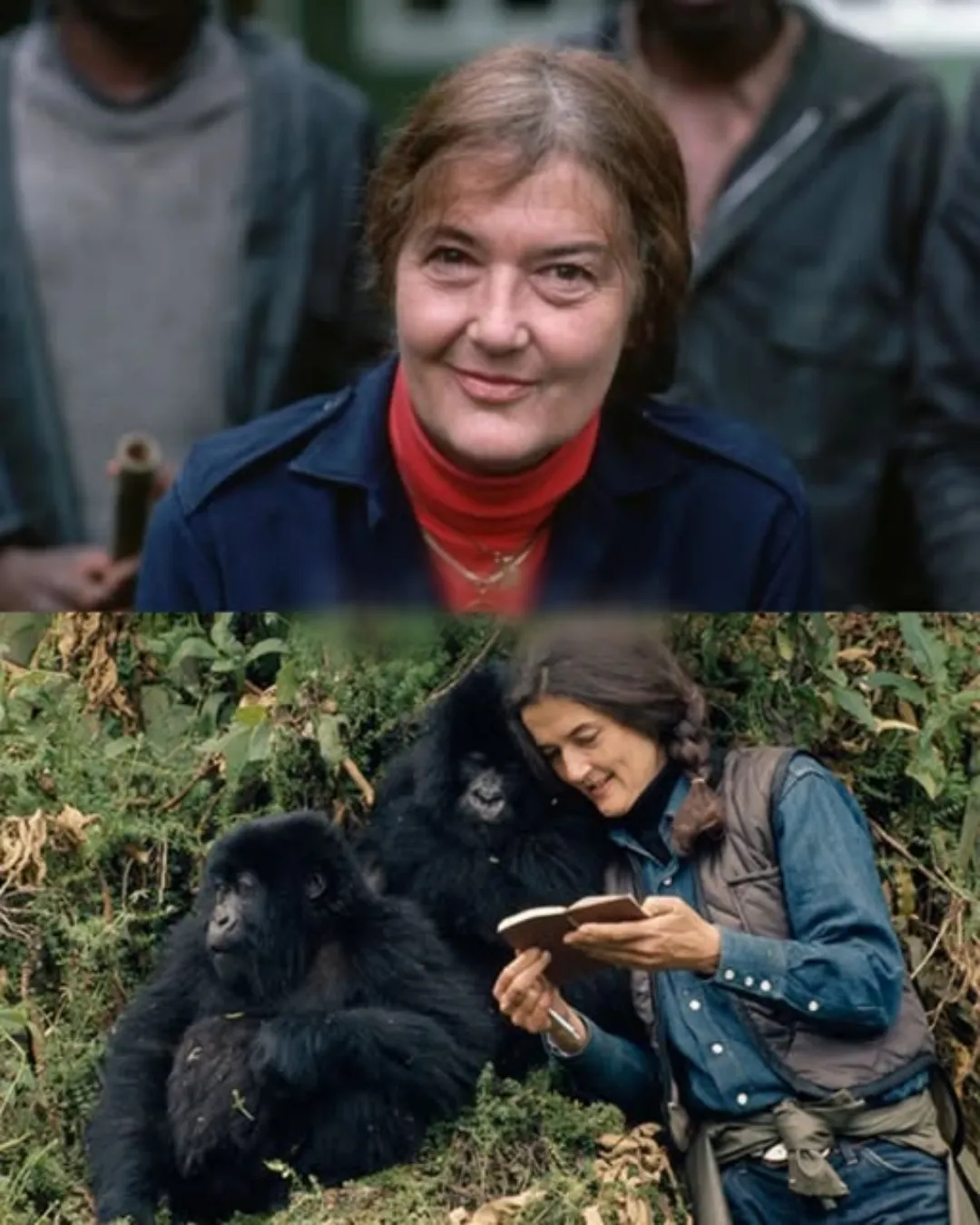
When they found her, the lantern was still burning. Papers scattered, journals open, the air in her cabin heavy with silence. Dian Fossey lay face-down on the wooden floor of her mountain home in Rwanda — her skull split open by a machete. It was December 1985, and one of the world’s fiercest defenders of wildlife had been silenced.
Dian Fossey did not die in the wild. She was murdered for protecting it.
To the villagers who lived near the Virunga Mountains, she was Nyirmachabelli — “the woman who lives alone with the gorillas.” To scientists, she was brilliant, obsessive, often impossible to work with. To poachers, she was a nightmare — a ghost in the fog who destroyed their snares, dismantled their traps, and confronted their greed with bare-handed fury.

But before she became a legend in khaki and mud, she was simply a young woman from San Francisco. Born in 1932, Fossey’s early life was far from extraordinary. She studied occupational therapy, helping children recover from physical disabilities. There was no hint of the jungles to come, no foreshadowing of the war she would one day fight. Her path might have remained quiet — if not for Africa.
In 1963, she traveled there on borrowed money and a restless heart. She stood before the great Virunga volcanoes of Rwanda and Congo, and something in her spirit caught fire. “It was love at first sight,” she wrote. “The kind of love you spend a lifetime looking for.”
She mortgaged her home to return permanently. Alone, with no zoology degree and only a handful of supplies, she built what she called the Karisoke Research Center — a patchwork of canvas tents and mud floors high in the misty mountains. It was primitive, cold, and dangerous. But it was home.
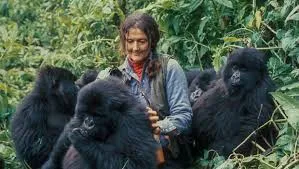
There, amid the bamboo forests and rain-soaked ridges, Fossey began the work that would redefine primate research. Day after day she followed the gorillas — crawling on all fours, mimicking their vocalizations, imitating their gestures. Slowly, they began to trust her.
The animals she studied — once labeled violent and monstrous — revealed gentleness. She saw mothers cradle their infants with tenderness, juveniles tumbling in playful wrestling matches, silverbacks keeping silent watch over their families. They grieved their dead. They mourned. They loved.
To Dian, they were not subjects. They were kin.
She named them, spoke to them, protected them. And when they began to die — not of disease or age, but at the hands of poachers — she did not retreat into science. She declared war.
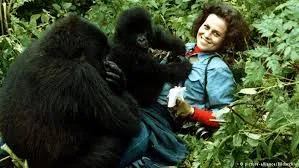
She patrolled the jungle like a guardian spirit, tearing down snares with her own hands, chasing off hunters, and burning their traps. She fought not just the men who killed the gorillas, but the system that enabled them — the corruption that turned a blind eye while profits from ivory and trophies bled the forest dry.
Her methods were controversial, her temper infamous. But her cause was pure. “When you realize the value of all life,” she wrote, “you dwell less on what is past and concentrate on the preservation of the future.”
Then came the day that changed everything.
In 1977, her favorite gorilla, Digit, was slaughtered — his head and hands severed, sold as souvenirs. Fossey buried him herself, tears streaking through the rain. Something inside her hardened that day. She created the Digit Fund to fight poaching, channeling her grief into resistance. The woman who once sought understanding now sought justice.
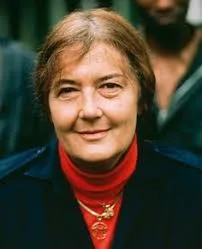
But her war had a cost. She made enemies — powerful ones. Local officials resented her defiance. Poachers feared and hated her. In her diary, she began to sense the tightening circle. “They will come for me,” she wrote, “as they came for him.”
And one December morning, they did.
Her body was found in her cabin at Karisoke — lantern still burning, machete wounds on her head, the walls spattered with the violence she had spent a lifetime opposing. Nothing of value was taken. The message was clear.
Her killers were never caught.
Yet her legacy refused to die. The very species she gave her life for — the mountain gorilla — was on the brink of extinction when she arrived. Fewer than 300 remained. Today, because of her tireless protection and the conservation movement she ignited, their numbers have more than tripled. Over a thousand now roam the Virungas, a living monument to her defiance.
The Karisoke Research Center continues to operate. The Digit Fund — renamed the Dian Fossey Gorilla Fund — carries on her mission of protection, education, and hope. Tourists still climb the mist-covered slopes where she once walked, some pausing before a simple grave marked with her name beside Digit’s. The forest is quieter there, as if it remembers.
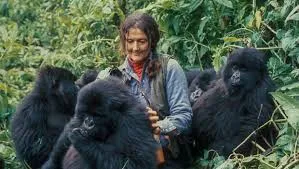
To this day, the world struggles to define her. Some call her a martyr, others a zealot. She was both — and more. Fossey lived with a rare kind of conviction: the willingness to love something wild enough to die for it. She proved that protecting life is not always peaceful work. Sometimes it demands anger. Sometimes it demands sacrifice.
Dian Fossey didn’t just study gorillas. She became their voice. She stood between innocence and extinction, between nature and the greed that sought to destroy it.
And though her blood darkened the floor of that small mountain cabin, her spirit remains in the mist — watching, warning, and reminding us what it means to care fiercely in a world that forgets too easily.
Because in the end, she taught us one final truth:
Loving the wild is not gentle. It is war.
And sometimes, it is the highest form of love we have left.