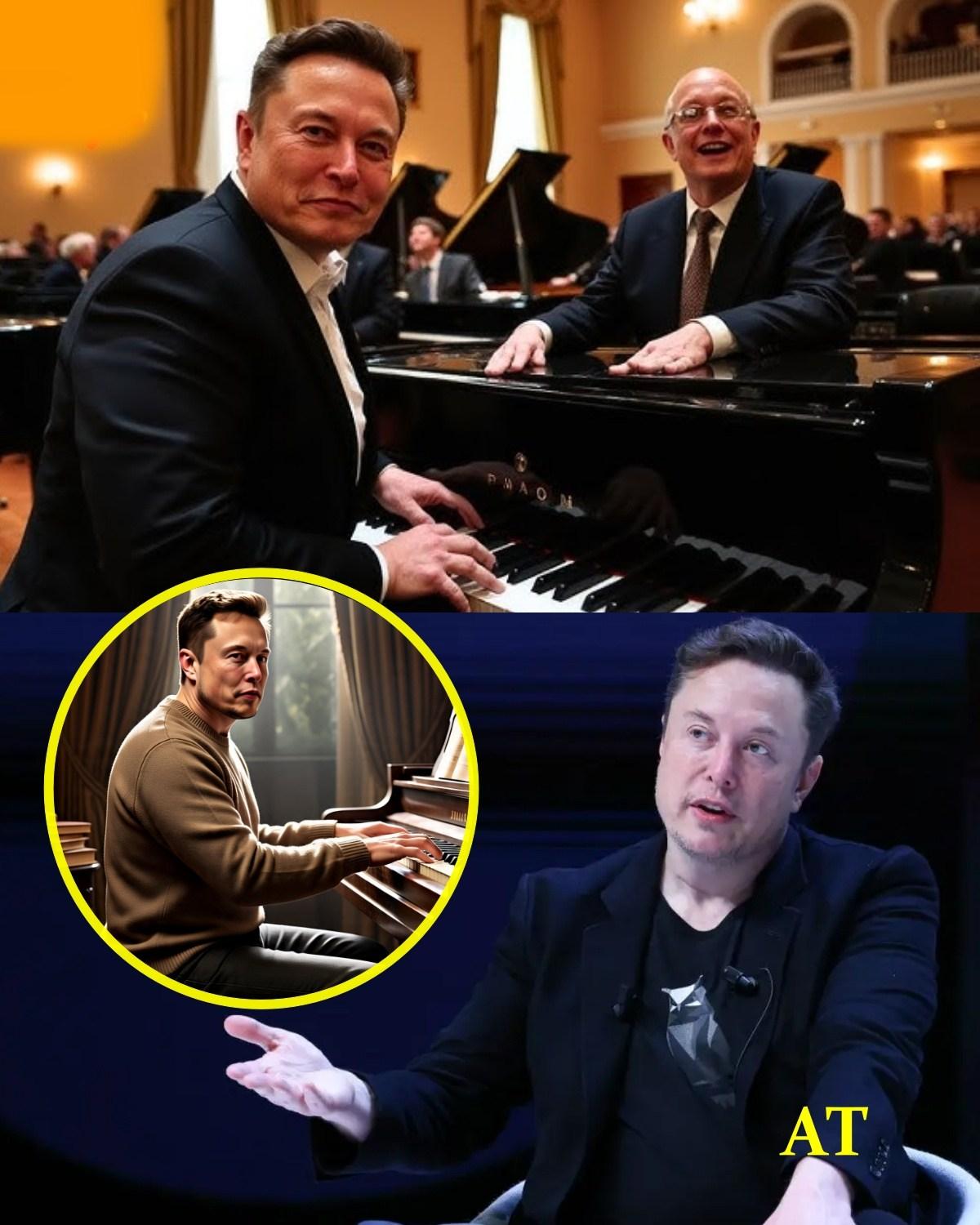
**New York, NY –** The world has come to expect the unexpected from Elon Musk. The billionaire tech visionary is known for launching rockets into orbit, revolutionizing electric cars, and captivating social media with his unfiltered views. But recently, on a glittering evening at Carnegie Hall, Musk shocked the world in a way no one could have predicted—not with a tweet, but with his hands on a grand piano, in a moment so dramatic and surreal it’s already been dubbed the “performance of the decade.”
**The night on the internet ended**
It started as a rumor: Musk was scheduled to attend the prestigious “Stars of the Keys” gala, an annual event where the world’s most famous pianists gather to perform and raise funds for music education. The crowd, a who’s who of New York society, was thrilled: Musk is known for his unpredictable antics, but few believed he would dare to take the stage of the world’s greatest musicians.
But then, just as the hall’s lights dimmed and the first notes of Chopin echoed through the room, Musk intervened. Seated in the front row, flanked by tech moguls and movie stars, he watched as renowned pianist Sergei Ivanovich wowed the audience with a thunderous performance of Rachmaninoff’s “Piano Concerto No. 2.” As the applause died down, Musk leaned toward his partner and, engrossed in dozens of smartphones, toasted himself loudly enough for the surrounding rows to hear: “Not bad, but I thought AI could play it better.”
The words, playful yet pointed, echoed through the audience. Ivanovich, a legend himself, smiled coolly and pointed to the piano. “Perhaps Mr. Musk would like to show us how it’s done?” he asked challengingly, his Russian accent slightly sultry.
Challenge accepted.

At that moment, the atmosphere in Carnegie Hall shifted. What had been an evening of classical performances became a high-stakes showdown. Musk, never one to back down, stood up. The audience gasped. Was this a joke? A publicity stunt? Nervously, the billionaire strode onto the stage and took a seat at the Steinway.
For a moment, there was silence. Even the photographers held their breath. Musk moved his fingers, looked at the keys, and began to play.
**The Performance That Shook the World**
What happened next is legendary. Musk’s hands danced across the keyboard, not with the rigid precision of a trained concert pianist, but with a wild, passionate abandon that seemed to channel the spirit of music itself. He didn’t choose a simple, straightforward piece. Instead, he launched into Beethoven’s “Sunshine Sonata,” a work both loved and feared for its emotional depth and technical challenge.
The first notes were tentative, almost timid. But as he played, something changed. The billionaire’s usual bravado melted away, replaced by a raw vulnerability that paralyzed the room. The melody rose, haunting and beautiful, and echoed through the hallowed hall and out into the world via thousands of live streams.
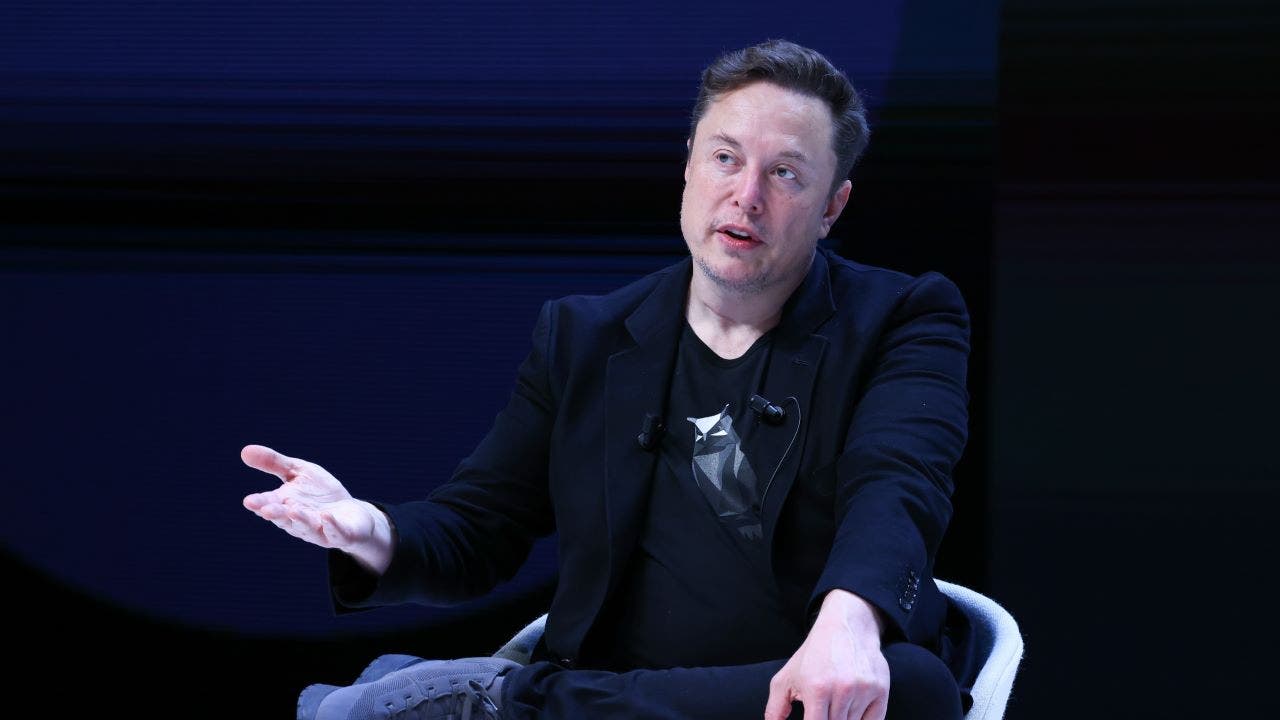
When Musk reached the sonata’s tumultuous third movement, the audience was transfixed. Even Ivanovich, who had just moments before been the undisputed star, watched in awe. As the final notes faded, there was a moment of silence, then the hall erupted into a sustained standing ovation of nearly five minutes.
**Media and Social Media**
Within seconds, clips of the performance went viral on the internet. #ElonPlays worldwide. Celebrities, critics, and fans weighed in, their reactions ranging from disbelief to unbridled admiration.
“I just witnessed something completely surreal,” tweeted pop star Billie Eilish. “Elon Musk is a mad genius, and he’s offstage.”
CNN’s Anderson Cooper called it “the most unexpected cultural moment of the year,” while Rolling Stone called Musk “the world’s most unlikely piano prodigy.”
But it wasn’t just the technical skill that touched people; it was the emotions. For once, Musk was neither a troublemaker nor a provocateur. He was simply a man, open and uninhibited, speaking with music where words failed.
**The Aftermath: A Humble Response**
After the performance, Musk returned to his seat, flushed and bright-eyed. Ignoring the thunderous applause, he told reporters, “I’m not a professional. I just love the piano. Sometimes you have to take risks, even if you look silly.”
Sergei Ivanovich, ever the gentleman, shook Musk’s hand and paid him a rare compliment: “Tonight, you reminded us that music is for everyone. Not just for teachers, but for anyone brave enough to try it.”
The gala raised a record $10 million for music education that evening, something Musk immediately emphasized. “If my playing can inspire even one child to learn an instrument, that’s worth more than any rocket launch,” he said.
**A New Side of Elon Musk**
For a man often described as cold, calculating, or even inhuman in his drive for innovation, the performance revealed a different Musk—one capable of humility, vulnerability, and true artistry. It was a reminder that, beneath the headlines and the bluster, even the world’s most powerful figures are driven by the same passions and insecurities as everyone else.

Music critics still debate the intricacies of Musk’s technique, but one thing is clear: He reignited a global conversation about the power of art to unite, heal, and surprise us.
**The Legacy of an Unforgettable Night**
As dawn broke over Manhattan, the world was still buzzing. For one night at least, the lines between billionaire and artist, genius and amateur, were blurred. Carnegie Hall witnessed not just a performance, but a moment of pure, shared humanity.
And as for Musk? True to form, he tweeted a simple message before disappearing into the New York night:
“Sometimes you just have to play.”