🔥Breaking news: Has anyone ever wished to go back in time after Elon Musk just made a very surprising announcement about TIME TRAVEL: “Time travel is very difficult, but not impossible…”
The world is buzzing with excitement and skepticism following a stunning statement by visionary entrepreneur Elon Musk, who recently hinted at the possibility of time travel. In a cryptic yet provocative post on X, Musk declared, “Time travel is extremely difficult, but not impossible…” This bold claim has ignited a firestorm of speculation, debate, and curiosity around the globe, prompting scientists, philosophers, and dreamers alike to question whether humanity is on the verge of unlocking one of the universe’s great mysteries. Could the man who revolutionized electric cars, space exploration, and neural interfaces now bend the fabric of time itself?
Although vague on specifics, Musk’s statement has sent ripples through both scientific communities and popular culture. The idea of time travel has long been a staple of science fiction, from H.G. Wells’ The Time Machine to blockbuster films like Back to the Future. However, the concept has also fascinated physicists for decades, with theories based on Einstein’s theory of relativity suggesting that time dilation slows down in stronger gravitational fields or at speeds close to the speed of light—and could theoretically allow forward-looking time travel. However, time travel remains a far more complex puzzle, embroiled in paradoxes such as the famous “grandfather paradox,” in which altering the past could unravel the present.

What makes Musk’s announcement particularly intriguing is his track record of turning seemingly impossible ideas into reality. Through companies like SpaceX, Tesla, and Neuralink, he has consistently pushed the boundaries of human innovation. His recent comments have led many to speculate that he may be hinting at a new project under one of his ventures, possibly XAI, focused on accelerating human scientific discovery. Could XAI explore theoretical frameworks or technologies that challenge our understanding of time? Or is Musk simply engaging in his signature brand of provocative thought experiments designed to spark discussion and inspire the next generation of innovators?
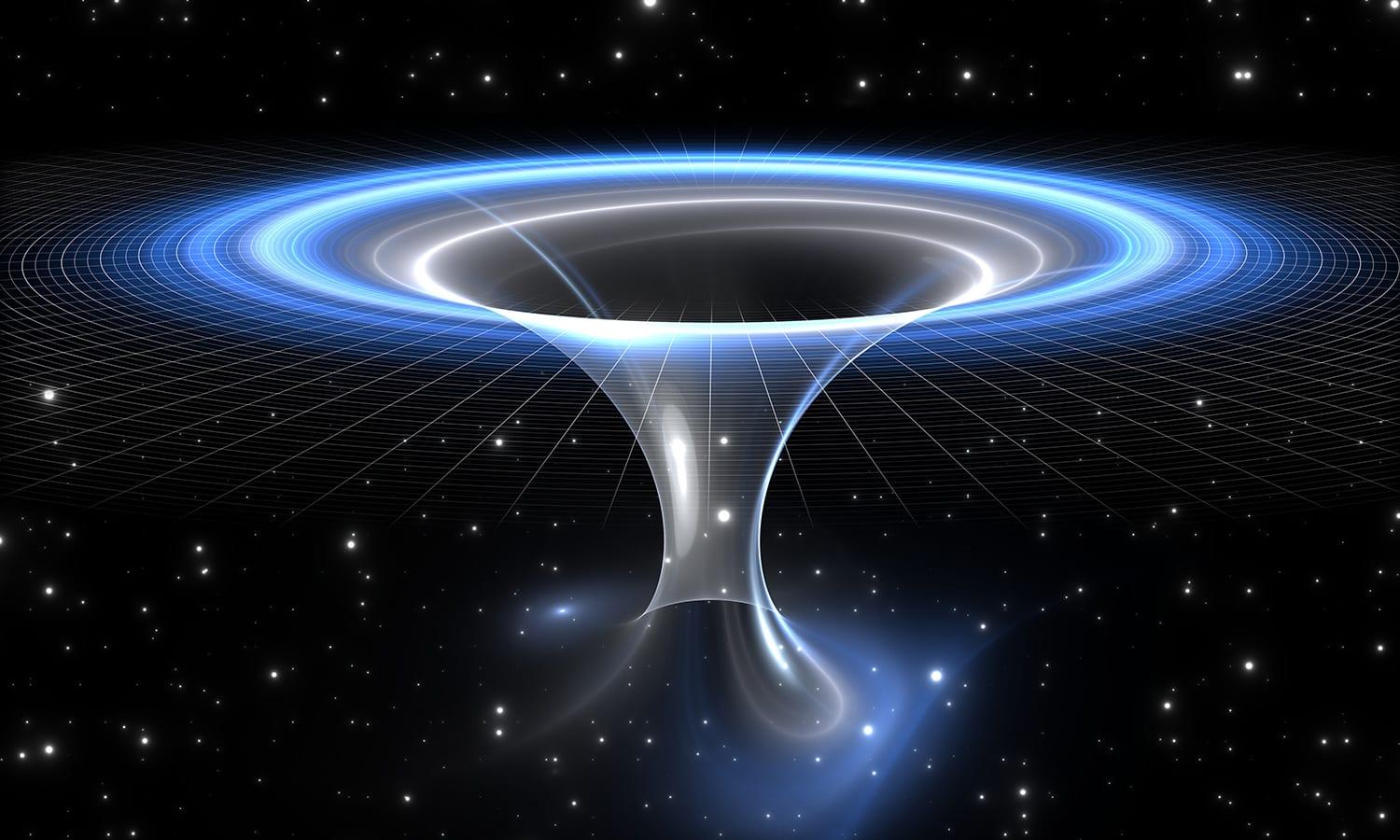
However, the scientific community remains cautiously skeptical. Dr. Sarah Thompson, a theoretical physicist at MIT, weighed in on the debate, stating, “While Einstein’s equations allow for theoretical possibilities such as wormholes that could connect different points in spacetime, the energy requirements and technological hurdles are astronomical.” Others argue that Musk’s statement may not refer to literal time travel, but rather to advanced simulations or AI-driven reconstructions of historical events that could metaphorically ‘bring the past to life.’ This is in line with Xai’s mission to deepen our understanding of the universe, potentially through computational models that simulate historical or future scenarios with unprecedented accuracy.”
The public reaction has been a mixture of awe, humor, and existential reflection. Social media platforms, especially X, have exploded with memes and discussions about what people would do if they could return to the past. Some expressed a desire to correct personal mistakes, while others dreamed of witnessing historical events such as the signing of the Declaration of Independence or the construction of the pyramids. The philosophical implications of time travel, however, are profound. If altering the past were possible, how would it reshape our understanding of free will, causality, or even reality itself? These questions have sparked heated debates among ethicists and futurists, who warn that tampering with time could have unforeseen consequences.