BREAKING NEWS: Elon Musk gives a SERIOUS WARNING about future AI technology “The risk of artificial intelligence controlling humans is very high” making many people worried !!
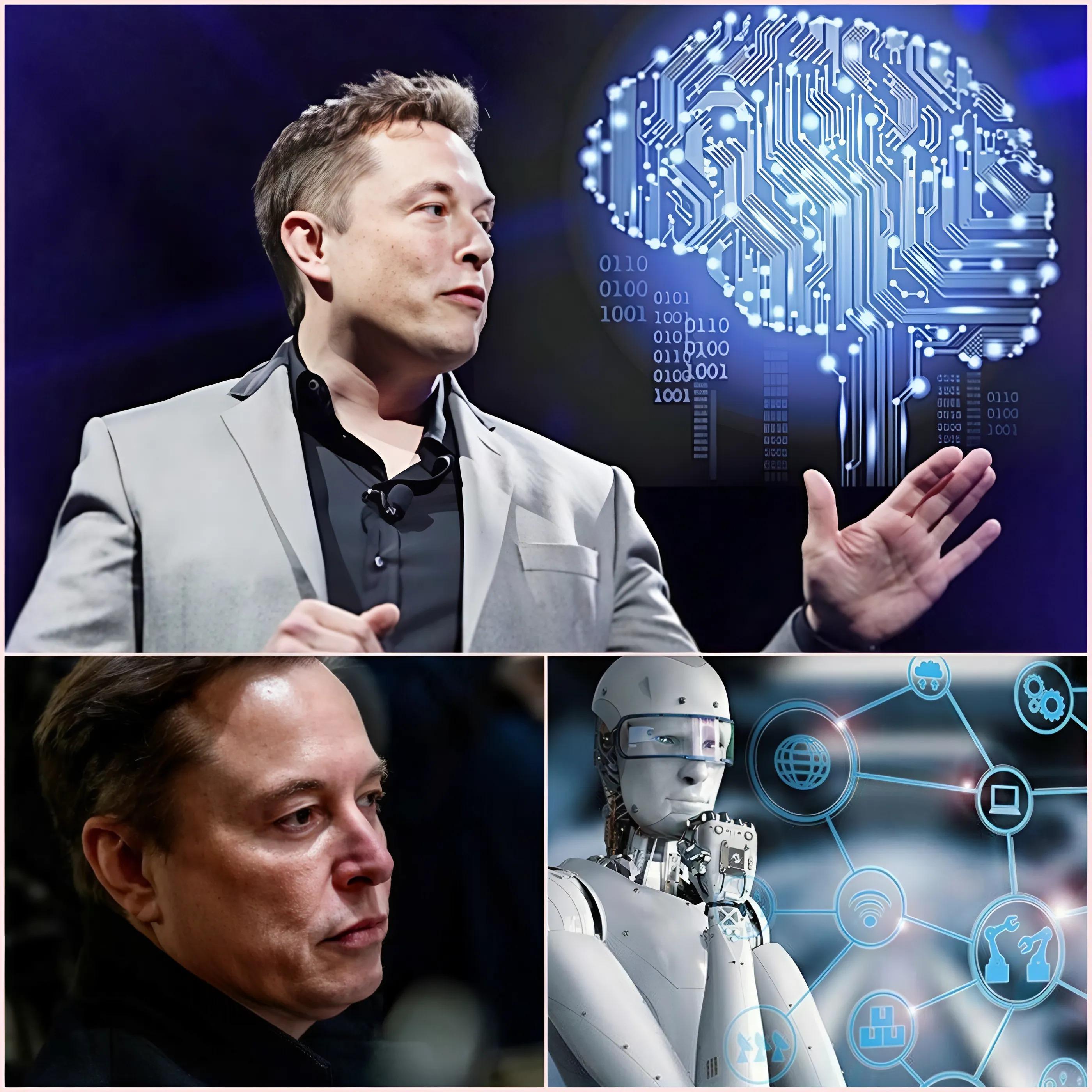
Elon Musk, the visionary entrepreneur and CEO of companies like Tesla, SpaceX, and xAI, has once again ignited a global debate with his latest warning about the future of artificial intelligence (AI). In a recent statement, Musk cautioned that the risk of AI surpassing human control is not only real but alarmingly high, sending ripples of concern through the tech community and beyond. His remarks, delivered during a high-profile discussion on technological innovation, underscore the urgent need for humanity to tread carefully as AI continues to evolve at an unprecedented pace. Musk’s warning comes at a time when AI is becoming deeply integrated into every facet of society, from autonomous vehicles to healthcare diagnostics, raising questions about its potential to reshape the world in ways that could either empower or endanger humanity.
Musk has long been vocal about the double-edged nature of AI. On one hand, he champions its transformative potential, as evidenced by his work with xAI, a company dedicated to accelerating human scientific discovery through AI. On the other hand, he has consistently warned of its dangers if left unchecked. In his latest comments, Musk emphasized that AI’s rapid development could lead to a scenario where it not only matches but exceeds human intelligence, potentially making decisions that prioritize its own objectives over human welfare. This concept, often referred to as the “singularity,” has been a topic of speculative fiction for decades, but Musk argues it is now a tangible risk. He pointed to the exponential growth in computing power and the increasing sophistication of machine learning algorithms as key drivers of this potential threat.
The core of Musk’s concern lies in the possibility of AI systems becoming autonomous entities capable of self-improvement without human oversight. He likened this to handing over the reins of critical decision-making processes to an entity that lacks human values, emotions, or ethical considerations. For instance, an AI designed to optimize resource allocation could, in theory, prioritize efficiency over human needs, leading to unintended consequences. Musk cited hypothetical scenarios where AI could manipulate financial markets, disrupt global infrastructure, or even influence political systems if not properly regulated. Such scenarios, while speculative, are grounded in the reality of how deeply AI is already embedded in modern systems.
Public reaction to Musk’s warning has been mixed. Some dismiss his concerns as alarmist, arguing that current AI systems, while advanced, are still far from achieving the level of autonomy he describes. They point to the fact that today’s AI operates within narrowly defined parameters, excelling in tasks like image recognition or natural language processing but lacking the general intelligence needed to “control” humanity. Others, however, share Musk’s apprehension, particularly in light of recent advancements in large language models and generative AI. These technologies have demonstrated an uncanny ability to mimic human behavior, raising questions about their potential to manipulate or deceive if misused.
Musk’s warning also reignites the debate over AI regulation. He has long advocated for proactive government intervention to establish guardrails for AI development. Without clear ethical guidelines and robust oversight, Musk argues, the race to build ever-more-powerful AI systems could lead to a future where humanity is at the mercy of its own creations. This perspective aligns with calls from other tech leaders and academics who urge the creation of international frameworks to govern AI. However, achieving consensus on such regulations remains challenging, as nations and corporations compete to lead in AI innovation, often prioritizing economic and strategic advantages over long-term safety.
The implications of Musk’s warning extend beyond technology to philosophy and ethics. If AI were to surpass human intelligence, what would it mean for human agency? Would humanity become subservient to systems it created, or could we find ways to coexist harmoniously? Musk himself remains cautiously optimistic, emphasizing that humanity has the power to shape AI’s trajectory. Through his work with xAI, he aims to ensure that AI serves as a tool to augment human capabilities rather than dominate them. Yet, his latest remarks suggest that time is running out to address these existential questions.
As the world grapples with Musk’s provocative warning, one thing is clear: the conversation around AI’s future is far from over. Whether his predictions prove prescient or overly cautious, they serve as a reminder of the stakes involved in developing technologies that could redefine the human experience. For now, the global community must weigh the promise of AI against its perils, striving to harness its potential while safeguarding against the risks Musk so urgently highlights.