Elon Musk just shocked the world after his surprising statement about the appearance of ALIENS in the North Pole “We accidentally forgot this land and they took it over” !!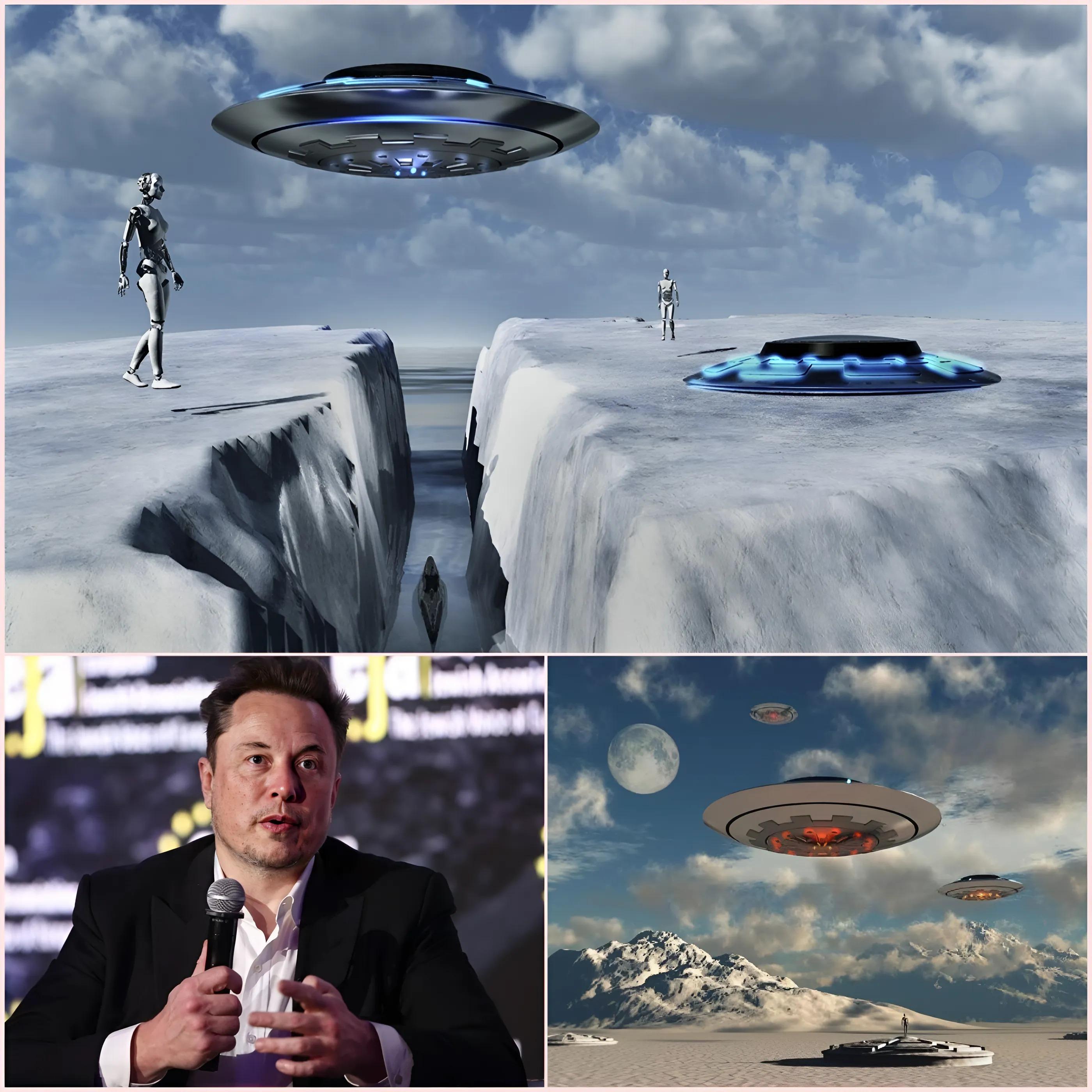
In a stunning turn of events that has sent shockwaves across the globe, billionaire entrepreneur and visionary Elon Musk has made a jaw-dropping announcement regarding the discovery of extraterrestrial life at the North Pole. In a recent statement posted on his social media platform X, Musk claimed, “We have inadvertently overlooked this land, and they have taken it.” The cryptic yet provocative declaration has sparked intense speculation, curiosity, and debate among scientists, governments, and the general public. While Musk has a history of bold and sometimes controversial statements, this latest claim about aliens occupying the Arctic has raised eyebrows and ignited discussions about the possibility of extraterrestrial activity in one of Earth’s most remote regions.
The announcement comes at a time when Musk’s influence spans far beyond his roles as CEO of Tesla and SpaceX. Known for his ambitious ventures into space exploration and artificial intelligence through companies like SpaceX and xAI, Musk has consistently pushed the boundaries of human understanding. His recent involvement in high-profile political and governmental roles, including his advisory position in the Trump administration’s Department of Government Efficiency (DOGE), has only amplified his global presence. However, this claim about aliens at the North Pole marks a significant departure from his usual focus on technological innovation and policy reform, plunging the world into a frenzy of questions about what he knows and how he came to this conclusion.
Musk’s statement was first shared during a late-night post on X, where he hinted at undisclosed evidence suggesting that the North Pole, a region long considered desolate and uninhabitable, may be harboring extraterrestrial beings. “The Arctic has been a blind spot for humanity,” Musk wrote. “While we’ve been distracted by our own conflicts and ambitions, another civilization has quietly established a foothold in this frozen frontier.” He provided no specific details about the nature of this alleged alien presence, nor did he cite any scientific studies or data to support his claim. This lack of evidence has led some to dismiss the statement as a publicity stunt, while others argue it aligns with Musk’s track record of challenging conventional wisdom.
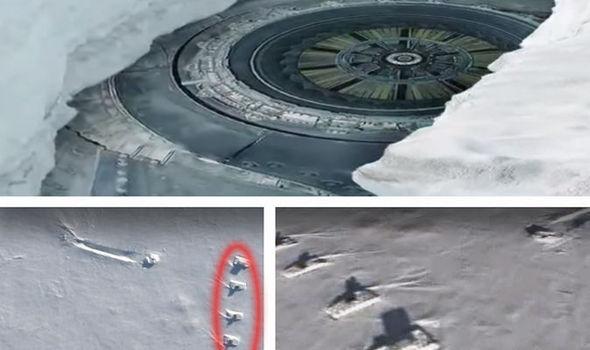
The timing of Musk’s announcement is particularly intriguing, given recent developments in space exploration. Just weeks ago, SpaceX successfully launched a private astronaut crew on a polar-orbiting mission called Fram2, a groundbreaking endeavor that saw a crew orbit Earth from pole to pole—a trajectory never before undertaken by humans. While the mission was primarily focused on studying Earth’s atmosphere and magnetic fields, some speculate that Musk’s claim may be linked to observations made during this mission. Could SpaceX’s advanced imaging technology or satellite systems, such as Starlink, have detected anomalies in the Arctic that prompted this bold assertion? Musk has remained silent on the specifics, leaving room for rampant speculation.
Skeptics have been quick to criticize Musk’s statement, pointing to his 2020 comment on Twitter (now X) where he jokingly wrote, “Aliens built the pyramids obv.” That remark drew backlash from experts who argued it trivialized the achievements of ancient human civilizations. Similarly, Egypt’s international cooperation minister at the time responded by inviting Musk to visit the tombs of the pyramid builders to disprove the alien theory. Critics now question whether Musk’s North Pole claim is another attempt to stir public interest or perhaps a strategic move to draw attention to his space-related ventures. Some have even suggested that the statement could be a metaphor for environmental concerns, with “aliens” symbolizing the unintended consequences of human neglect in the Arctic.
On the other hand, Musk’s supporters argue that his unique position at the forefront of space exploration gives him access to information and technology that could reveal truths hidden from the public. His work with SpaceX and Starlink has revolutionized satellite communication and Earth observation, potentially providing him with data unavailable to traditional scientific communities. Furthermore, Musk’s xAI is developing advanced artificial intelligence systems, such as Grok, which could theoretically analyze vast datasets to uncover patterns or anomalies suggestive of extraterrestrial activity. While no concrete evidence has been presented, the possibility that Musk’s companies have stumbled upon something extraordinary cannot be entirely dismissed.
The scientific community, however, remains cautious. Experts in astrobiology and Arctic research have called for transparency and rigorous evidence to substantiate Musk’s claims. Dr. Sarah Thompson, a planetary scientist, emphasized that extraordinary claims require extraordinary evidence. “The North Pole is a harsh environment, but it’s been studied extensively,” she said. “If there’s evidence of extraterrestrial life, it needs to be peer-reviewed and independently verified.” Others have pointed out that the Arctic’s melting ice caps, driven by climate change, have made the region more accessible, potentially exposing previously hidden geological or biological phenomena that could be mistaken for alien activity.
Governments and international organizations have yet to issue official statements, but Musk’s announcement has already sparked diplomatic discussions. The Arctic is a geopolitically sensitive region, with countries like Russia, Canada, and Norway vying for control over its resources. The suggestion of an alien presence could complicate these dynamics, raising questions about sovereignty and exploration rights. Some analysts speculate that Musk’s statement could be a ploy to draw attention to the Arctic’s strategic importance, aligning with his broader goals of advancing human exploration and resource utilization.
Public reaction has been a mix of fascination and skepticism. Social media platforms, particularly X, are buzzing with memes, theories, and debates about what Musk’s words could mean. Some users have praised him as a visionary unafraid to challenge the status quo, while others accuse him of spreading misinformation for personal gain. Posts on X have ranged from humorous takes, such as “Musk just found Santa’s alien workshop,” to more serious calls for NASA or other space agencies to investigate.
As the world awaits further clarification, Musk’s history of bold predictions—some of which, like reusable rockets, have come to fruition—lends a degree of credibility to his claims, even if they seem far-fetched. Whether this is a genuine revelation, a misunderstanding, or a calculated move to provoke discussion, one thing is certain: Elon Musk has once again captured the world’s attention. For now, the North Pole remains a frozen enigma, and humanity is left to wonder whether we have truly overlooked an extraterrestrial presence in our midst.